







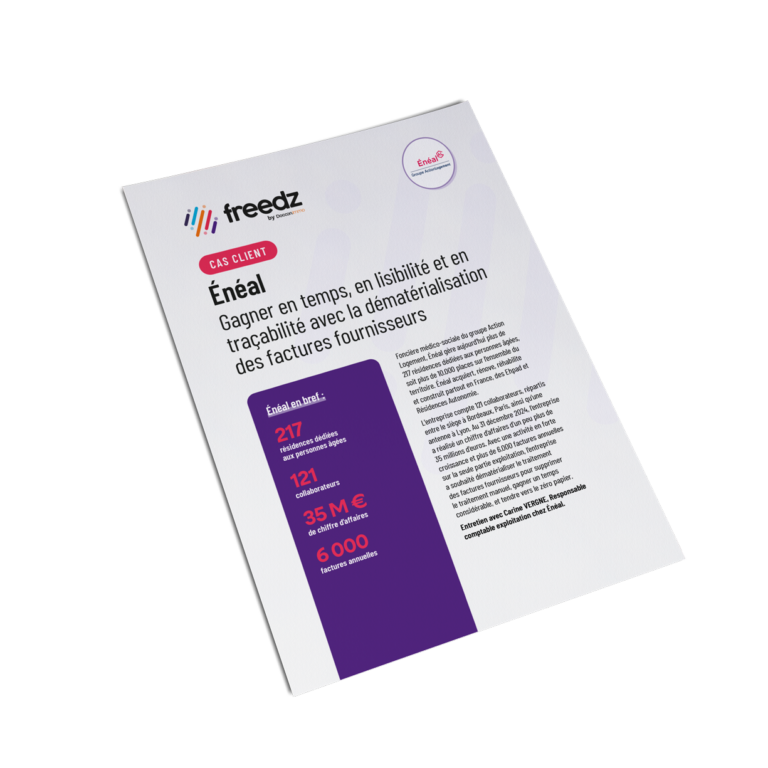
Énéal – Gagner en temps, en lisibilité et en traçabilité avec la dématérialisation des factures fournisseurs
Foncière médico-sociale du groupe Action Logement, Énéal gère aujourd’hui plus de 217 résidences dédiées aux personnes âgées, soit plus de 10.000 places sur l’ensemble du territoire. Énéal acquiert, rénove, réhabilite et construit partout en France, des Ehpad et Résidences Autonomie.
L’entreprise compte 121 collaborateurs, répartis entre le siège à Bordeaux, Paris, ainsi qu’une antenne à Lyon. Au 31 décembre 2024, l’entreprise a réalisé un chiffre d’affaires d’un peu plus de 35 millions d’euros. Avec une activité en forte croissance et plus de 6.000 factures annuelles sur la seule partie exploitation, l’entreprise a souhaité dématérialiser le traitement des factures fournisseurs pour supprimer le traitement manuel, gagner un temps considérable, et tendre vers le zéro papier.
Entretien avec Carine VERGNE, Responsable comptable exploitation chez Énéal.
To know more about it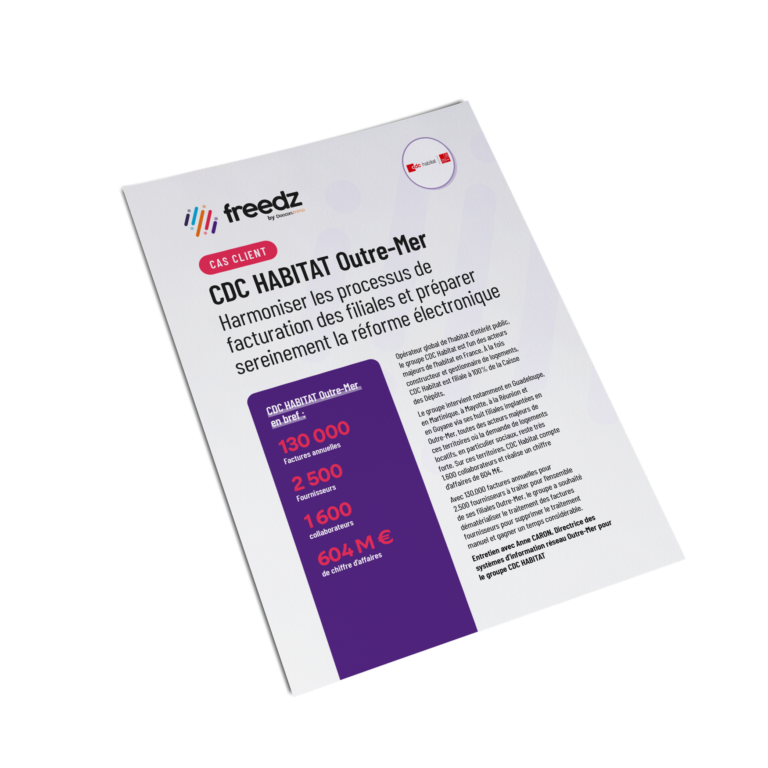
CDC Habitat Outre Mer – Harmoniser les processus de facturation des filiales et préparer sereinement la réforme de la facturation électronique
Opérateur global de l’habitat d’intérêt public, le groupe CDC Habitat est l’un des acteurs majeurs de l’habitat en France. À la fois constructeur et gestionnaire de logements, CDC Habitat est filiale à 100% de la Caisse des Dépôts.
Le groupe intervient notamment en Guadeloupe, en Martinique, à Mayotte, à la Réunion et en Guyane via ses huit filiales implantées en Outre-Mer, toutes des acteurs majeurs de ces territoires où la demande de logements locatifs, en particulier sociaux, reste très forte. Sur ces territoires, CDC Habitat compte 1.600 collaborateurs et réalise un chiffre d’affaires de 604 M€.
Avec 130.000 factures annuelles pour 2.500 fournisseurs à traiter pour l’ensemble de ses filiales Outre-Mer, le groupe a souhaité dématérialiser le traitement des factures fournisseurs pour supprimer le traitement manuel et gagner un temps considérable.
Entretien avec Anne CARON, Directrice des systèmes d’information réseau Outre-Mer pour le groupe CDC HABITAT
To know more about it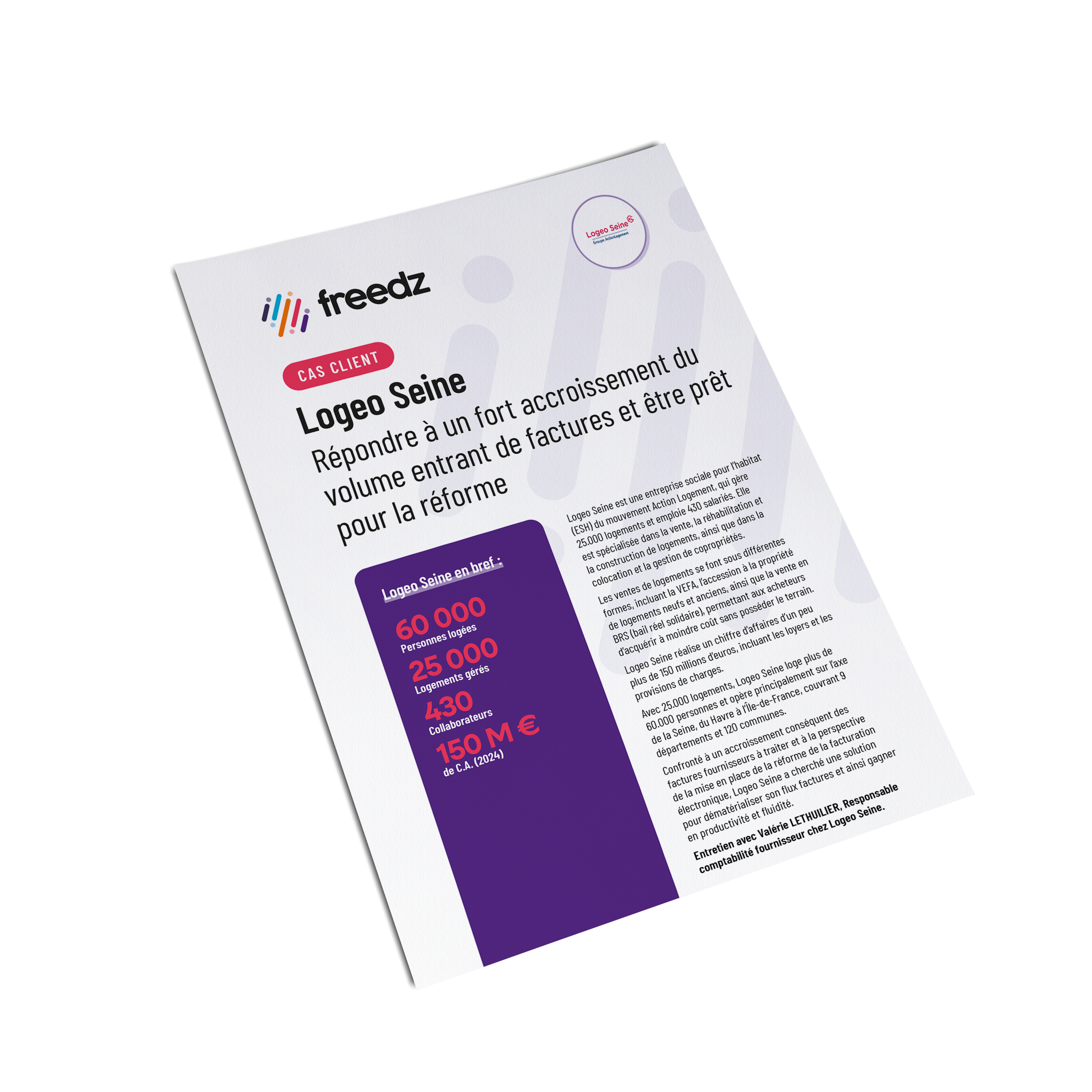
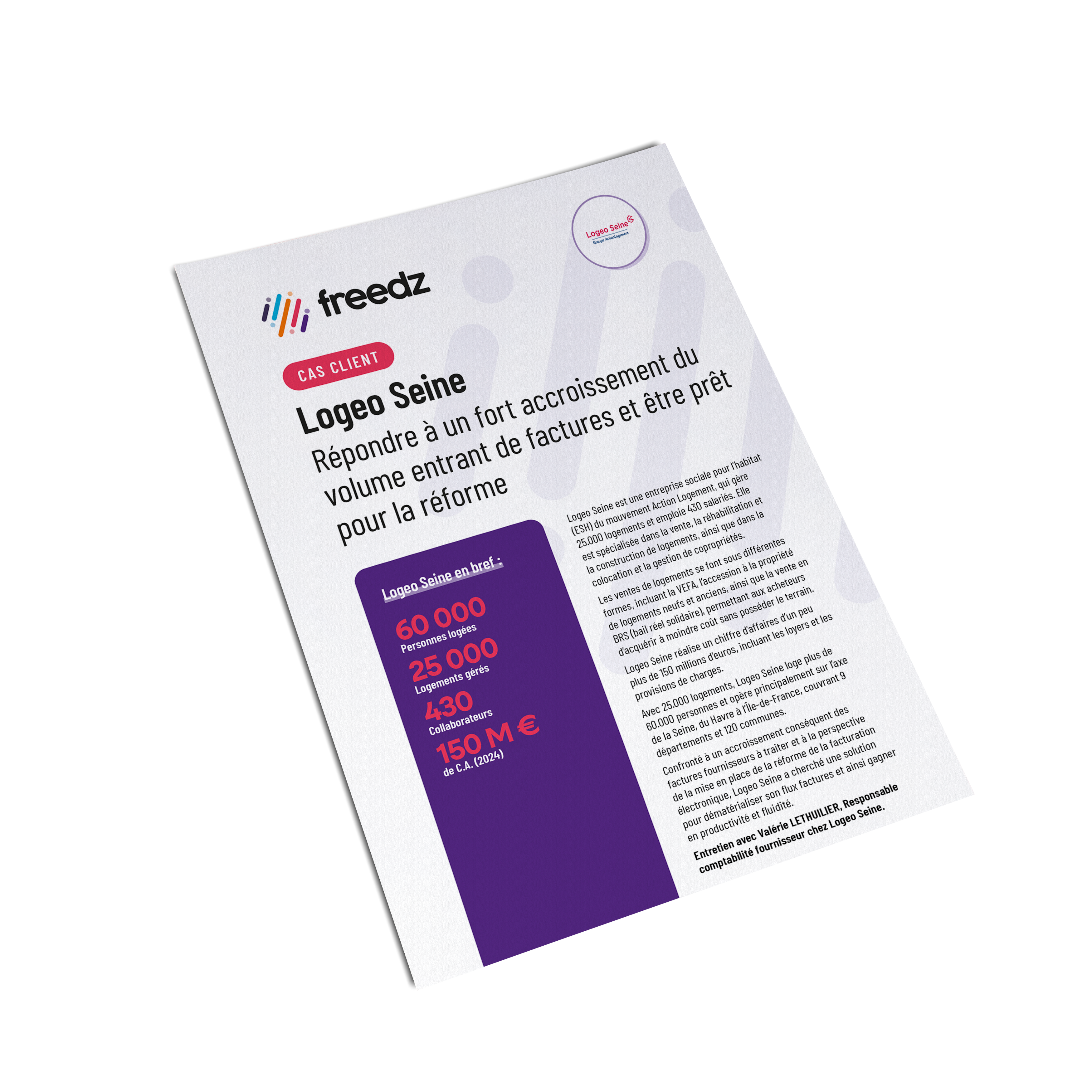
Logeo Seine – Responding to a sharp increase in incoming invoices and preparing for reform
Logeo Seine est une entreprise sociale pour l’habitat (ESH) du mouvement Action Logement, qui gère 25.000 logements et emploie 430 salariés. Elle est spécialisée dans la vente, la réhabilitation et la construction de logements, ainsi que dans la colocation et la gestion de copropriétés.
Les ventes de logements se font sous différentes formes, incluant la VEFA, l’accession à la propriété de logements neufs et anciens, ainsi que la vente en BRS (bail réel solidaire), permettant aux acheteurs d’acquérir à moindre coût sans posséder le terrain.
Logeo Seine réalise un chiffre d’affaires d’un peu plus de 150 millions d’euros, incluant les loyers et les provisions de charges.
Avec 25.000 logements, Logeo Seine loge plus de 60.000 personnes et opère principalement sur l’axe de la Seine, du Havre à l’Île-de-France, couvrant 9 départements et 120 communes.
Confronté à un accroissement conséquent des factures fournisseurs à traiter et à la perspective de la mise en place de la réforme de la facturation électronique, Logeo Seine a cherché une solution pour dématérialiser son flux factures et ainsi gagner en productivité et fluidité.
Entretien avec Valérie LETHUILIER, Responsable comptabilité fournisseur chez Logeo Seine.
To know more about it