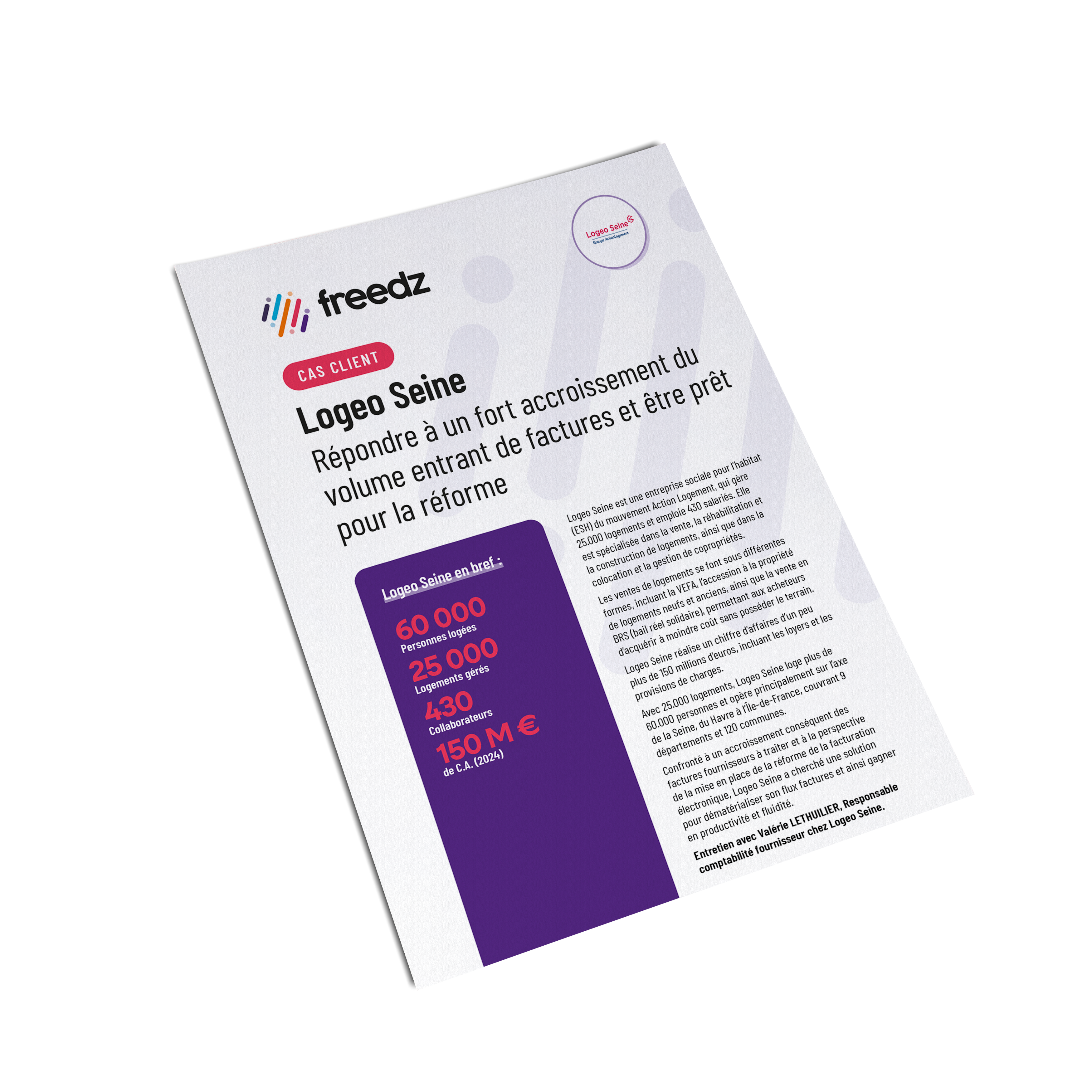
Logeo Seine is a social housing company (ESH) belonging to the Action Logement movement, which manages 25,000 homes and employs 430 people. It specializes in the sale, renovation, and construction of housing, as well as in shared accommodation and the management of condominiums.
Housing sales take various forms, including off-plan sales, ownership of new and old homes, and sales under a joint lease (BRS), allowing buyers to purchase at a lower cost without owning the land.
Logeo Seine generates revenue of just over €150 million, including rent and provisions for expenses.
With 25,000 housing units, Logeo Seine houses more than 60,000 people and operates mainly along the Seine river, from Le Havre to Île-de-France, covering nine departments and 120 municipalities.
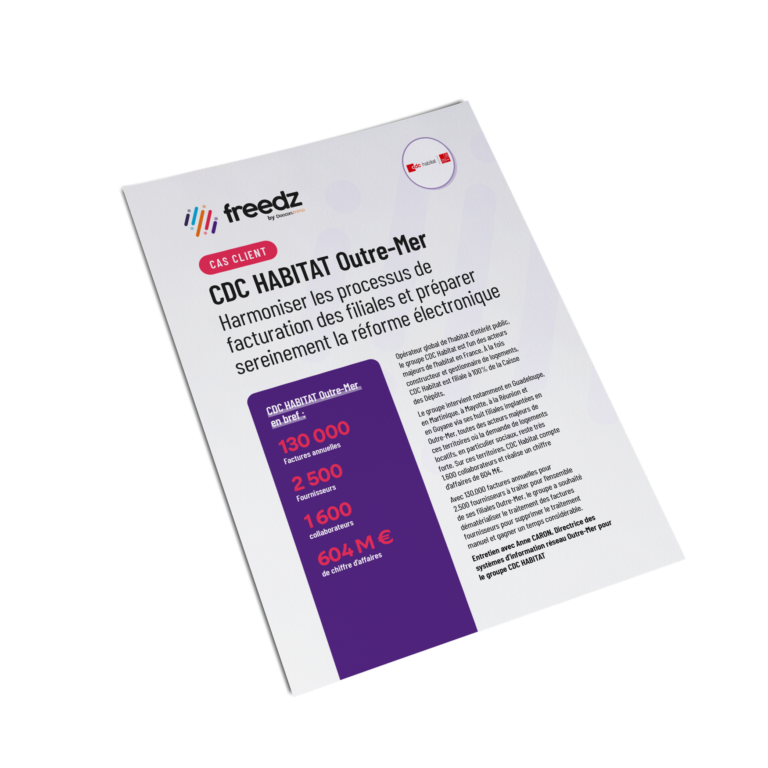
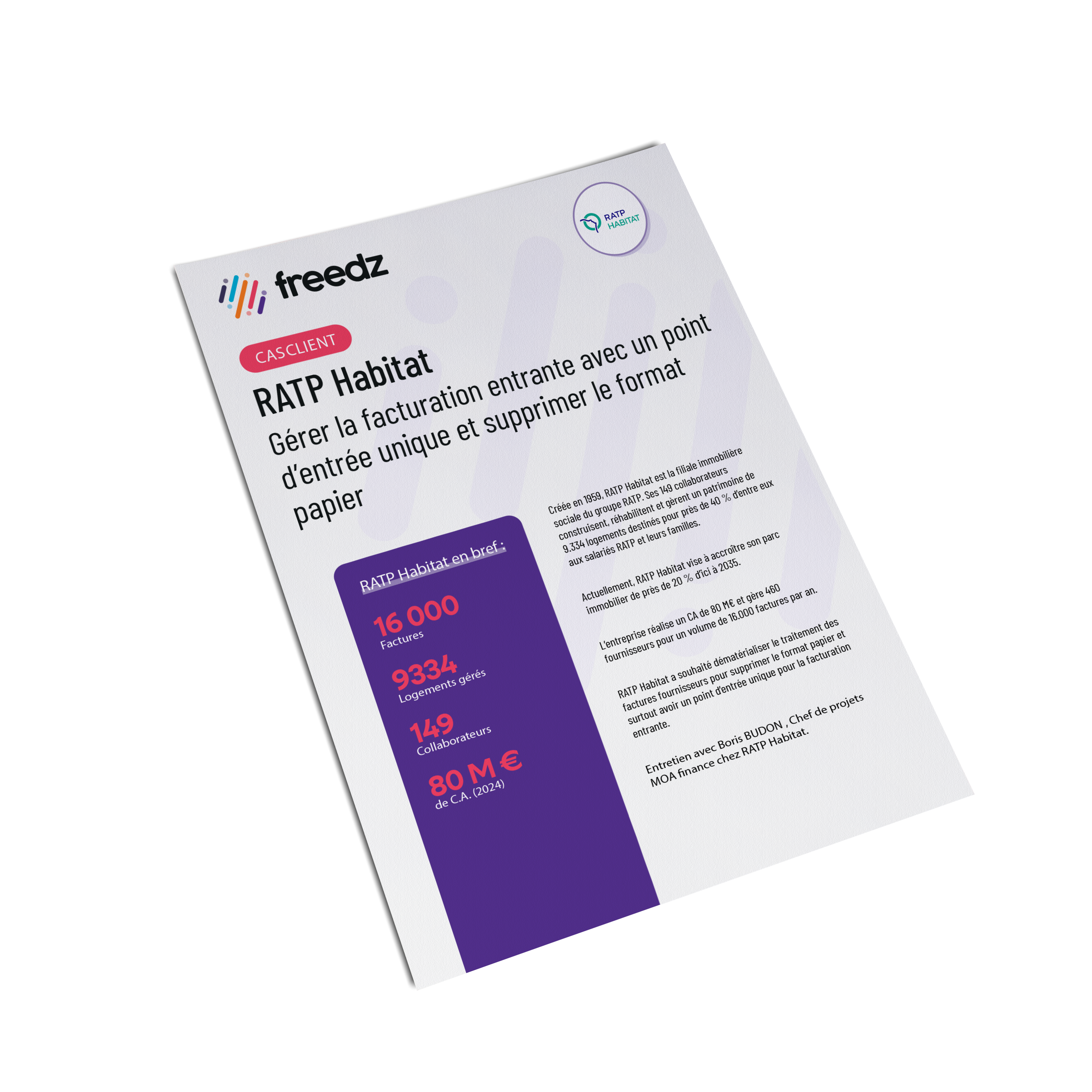
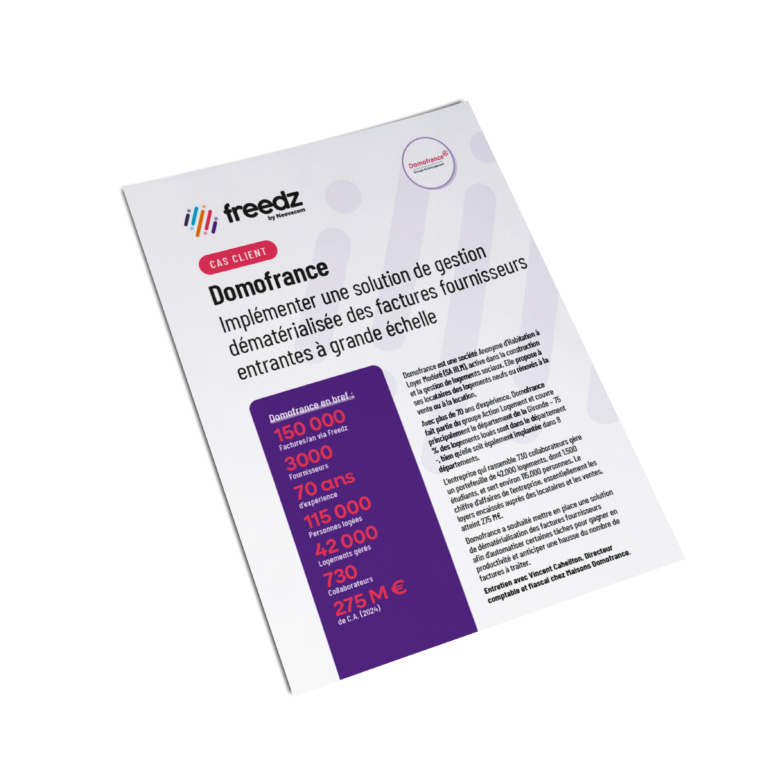
Faced with a significant increase in supplier invoices to be processed and the prospect of implementing electronic invoicing reform, Logeo Seine sought a solution to digitize its invoice flow and thus increase productivity and fluidity.
Interview with Valérie LETHUILIER, Accounts Payable Manager at Logeo Seine.
What was your initial problem?
Before implementing the Freedz solution, our company had to manage two successive mergers, which drastically increased the number of supplier invoices to be processed. In 2016, two social housing providers, Estuaire de la Seine and Dialoge, merged to become Logeo Seine Estuaire. Then, in 2020, Logeo Seine Estuaire merged with Logiseine to become Logeo Seine. Following these two mergers, our volume of supplier invoices increased by 40%!
With paper-based management, we wasted a lot of time on archiving and filing. Processing invoices was very time-consuming, with back-and-forth between our accounting department and the group's agencies, and the risk of losing invoices and therefore information. We encountered difficulties in managing invoices, both for operating expenses and support functions. The same was true for investment invoices.
Finally, not only does mail management come at a cost, but poor distribution can also lead to wasted time. In short, a lack of efficiency...
What made you take the plunge?
In 2018, we began to consider digitization with the implementation of an invoice scanning system—the DocuPost solution—before finally moving to 100% digitization of supplier invoices with Freedz. Following the two mergers, the volume of invoices increased considerably, and we had to anticipate compliance with the upcoming electronic invoicing reform.
How was the project set up?
Very well. We were able to move forward quickly from the outset, as Neovacom, which provides the Freedz solution, was already familiar with our ERP system, Ulis, and our IT service provider, Sopra Steria. Neovacom was therefore able to quickly interconnect its solution with our ERP system.
The Neovacom teams supported us throughout the project, particularly Ondine SANCHEZ, Customer Success Manager, who answered our questions and addressed our needs at every stage.
How did your suppliers adapt?
Very well. Neovacom organized webinars with our suppliers. Once again, Ondine SANCHEZ was present to provide support as needed for each supplier that joined the loop.
And then, when suppliers realize that using a platform to digitize their own invoices will speed up and improve the reliability of the processing, they are even more willing to adopt it. Not to mention the time savings...
Overall, I have noticed that the digitization of processes within companies is becoming commonplace, including among our partners. The accumulation of paper invoices on desks is gradually disappearing, and people are also more mobile, working remotely and, as a result, favoring paperless solutions.
What benefits do you see from using Freedz?
Of course, thanks to the solution, we have saved a lot of time. First of all, because it is the suppliers who enter their invoices into the platform. Secondly, our expense tracking has become more reliable, as there can no longer be any loss of documents or invoices. We process our suppliers' invoices more quickly, which is important, as we have a legal payment deadline to meet. Finally, we obviously save time on invoice follow-ups with a dashboard showing paid and upcoming invoices. On this last point, we sometimes insist that our suppliers give their accountants access to the platform to avoid unnecessary follow-ups.
Do you plan to use the Work Status module?
Not yet, but we will be implementing it this year. As far as I am concerned, it is a necessary solution for the smooth running of my department. Until now, work orders have been sent directly to our real estate department and have therefore not been entered into our Ulis ERP system. This results in a significant loss of time when we are contacted by our suppliers and we do not have any information on the processing of invoices for work in progress. Implementing the Work Status module will therefore enable us to improve our accounting tracking and, above all, provide visibility on invoices from our construction suppliers.
How is Logeo Seine anticipating the regulatory requirements for 2026-2027 related to the reform of the
electronic invoicing?
We are encouraging our customer and supplier partners to adopt a paperless solution now in order to avoid the rush in 2026/2027. We work with public bodies, mainly for water bills. They have made it clear to us that they will switch to paperless billing at the last minute. We cannot do anything about this.
However, I know that Freedz is currently working closely with Veolia so that the company can submit its invoices on the Freedz platform.
The fact that Freedz is registered as a Partner Dematerialization Platform is a plus, right?
Yes, of course. It's the assurance that we don't have to change solutions to comply with the electronic invoicing reform, and I had no doubts about the platform's certification as a PDP.
What would you say to a company hesitating to adopt a solution like Freedz?
There are many advantages to implementing it. It is a reliable, secure, and accessible solution wherever you are, which is a major asset, particularly for employees. The tool allows for better tracking of supplier invoices than manual processing of paper documents, and is therefore much more environmentally friendly!
What's more, we have a very good relationship with the Freedz teams. They are friendly and reliable, providing real support for customers. We also have the opportunity to meet them once a year at the Freedz User Club.
Do you have any other projects underway related to digitization?
Yes, the implementation of the Work Status module that I mentioned. We are also working on digitizing invoices for business customers, which I think will also be done with Neovacom, but I am less involved in that area. We have a large flow of outgoing invoices to private individuals who are tenants. We are trying to improve our processes in this regard.
* Temporary registration pending official registration