









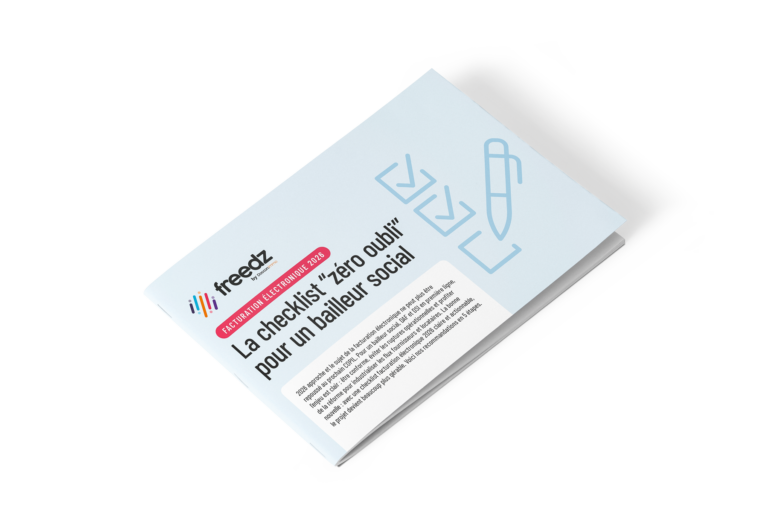
The “zero oversights” checklist for social landlords
2026 is approaching, and the issue of electronic invoicing can no longer be postponed until the next steering committee meeting. For social landlords, CFOs, and CIOs on the front line,
the challenge is clear: comply with regulations, avoid operational disruptions, and take advantage of the reform to industrialize supplier and tenant flows. The good news is that with a clear and actionable 2026 e-invoicing checklist, the project becomes much more manageable. Here are our recommendations in five steps:
To know more about it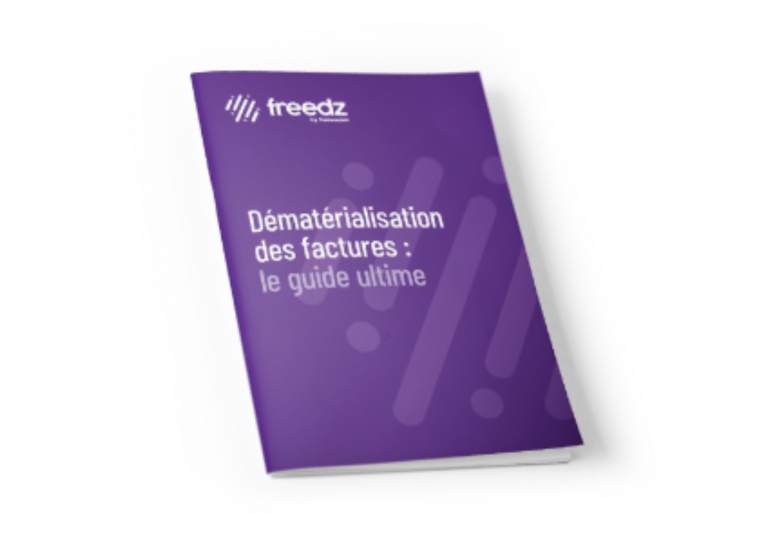
Invoice dematerialization: the ultimate guide
The reform of electronic invoicing will gradually lead French companies to begin the process of dematerializing their invoices.
Between 2026 and 2027, they will have to comply with the tax authorities' new e-invoicing and e-reporting requirements.
Don't wait until the last moment to learn more about the subject and comply! This white paper guides you step-by-step through the process of dematerializing invoices.
You'll discover the different types of electronic invoices, the legal aspects to be respected, and strategies to optimize your transition project in full compliance.
A valuable resource for anticipating regulatory obligations and taking full advantage of the benefits of dematerialization.
To know more about it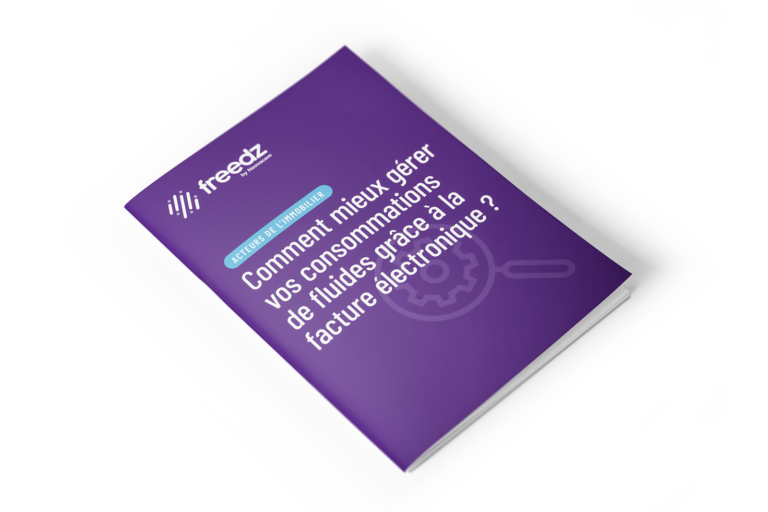
Real estate players: how to better manage your fluid consumption
The Elan law, tenant rebilling, consumption anomalies, water leaks... There are many issues related to energy and fluid management for real estate players.
Whether you're a social landlord or in the commercial property sector, these are major components of your operating expenses, as well as being a source of friction with potential tenants.
But while consumption data is usually "accessible" in invoices, analysis remains difficult and laborious. This is due to a lot of paper, manual data entry and, in short, time spent compiling data in Excel or in an analysis tool... When it's not simply put aside!
And yet, electronic invoicing can simplify all this, by facilitating access to data, opening the door to numerous sources of savings...
So how do you exploit its full potential? Discover the answer in our white paper.
To know more about it