Freedz: the Approved Platform that aligns the objectives of the CFO, CIO, and Accounts Payable

Accounting Invoice Finance function Business organization Processes and tools Supplier relations

September 2026 is fast approaching. This deadline marks the entry into force of the obligation for all French companies to receive electronic invoices. Three key players within the company must join forces: the Chief Financial Officer (CFO), the Chief Information Officer (CIO), and the Accounts Payable Manager. Each has a different perspective on this transformation project, with its own challenges and constraints.

The challenge? Choosing an Approved Platform (PA) that simultaneously meets the financial requirements of the CFO, the technical requirements of the CIO, and the daily operational needs of the accounts payable department. But this reform could well have an unexpected effect: by imposing joint collaboration, it offers a rare opportunity to break down the barriers between these three departments and streamline their collaboration in the long term. This regulatory constraint thus becomes a lever for collective performance and internal decompartmentalization.

Three perspectives, three priorities for the 2026 reform

The CFO: profitability, financial management, and compliance

For the Chief Financial Officer, electronic invoicing is primarily an economic performance issue. Its main objective? To drastically reduce invoice processing costs. According to industry studies, a paper invoice costs around €10 to €15 to process, compared to less than €1 for an automated electronic invoice. 

This cost reduction does not only apply to computer processing: it also includes postage, printing, physical storage, and document search time.

The CFO is also seeking better control over cash flow. With a powerful electronic invoicing solution, they can track the status of their financial commitments in real time, anticipate payment deadlines, and optimize their working capital requirements. Dashboards provide them with complete visibility into the amounts of invoices that have been paid, are being processed, or are due. Electronic invoicing provides real-time visibility into financial commitments, allowing them to anticipate due dates, optimize working capital requirements, and negotiate better supplier terms. Finally, regulatory compliance is a major concern. CFOs must ensure that their companies will comply with their legal obligations as of September 2026, or face administrative and financial penalties. They therefore expect e-invoicing providers to be officially registered with the tax authorities: a non-negotiable prerequisite. And that it guarantees the compliant transmission of billing data to the DGFiP (French Public Finance Directorate). Beyond simple compliance, CFOs also seek to anticipate future regulatory changes so that they do not have to change tools in two or three years' time.

The CIO: integration, security, and technical reliability

For his part, the Director of Information Systems approaches the reform from the perspective of technical architecture and cybersecurity. His primary selection criterion? The PA's ability to integrate seamlessly with the existing IT ecosystem. The company already uses ERP, accounting software, and perhaps construction site management tools for the building and public works sector. The new platform must communicate with these systems without creating a technological disruption.

Data security is a top priority for the CIO. Invoices contain sensitive commercial information, personal data, and confidential financial details. In 2025, faced with an increase in cyberattacks, CIOs will favor ISO 27001-certified solutions and, ideally, SecNumCloud for sovereign hosting.

The CIO is also concerned about the availability and performance of the solution. An electronic invoicing system that crashes or slows down invoice processing can paralyze accounting operations. He is therefore looking for a reliable platform with a high availability rate and a robust technical infrastructure.

Finally, the CIO must think long term. The chosen solution must be able to evolve with future regulations, adapt to increased workloads, and integrate new features without requiring a complete overhaul of the system.

The Accounts Payable Manager: simplicity and efficiency

For the Accounts Payable Manager, the challenge is primarily operational. His team processes dozens, even hundreds, of invoices every day. Above all, he expects the PA to truly simplify his teams' work. The interface must be intuitive, workflows must be fluid, and automated controls must be relevant. If the tool complicates tasks, team buy-in will be compromised.

Supplier relationship management is another crucial issue. How can you convince hundreds of service providers to change their habits? How can you support them in using the invoice submission portal? The Accounts Payable Manager needs a solution that makes life easier for their business partners, with a user-friendly portal and clear support materials.


Freedz: the PA that brings together CFOs, CIOs, and Accounts Payable Managers

  • Freedz stands out as the only Approved Platform specializing in the real estate and construction sectors. 

This official registration by the DGFiP meets the DAF's compliance requirements, while sector-specific specialization ensures that the features precisely match business needs.

Native integrations with market-leading ERP systems

  • The platform was designed from the outset to interface with the main software programs used by social housing providers and construction companies: IKOS, ULIS, Cassiopae, TEGIA, Altaïx, etc.

Freedz collaborates with major publishers such as Aareon, Sopra Steria, and Scepia to ensure seamless data integration. 

Over 18,000 suppliers already connected

  • With more than 18,000 connected suppliers, Freedz benefits from a powerful network effect that facilitates deployment and accelerates adoption.

This existing ecosystem greatly facilitates deployment for new customers. As evidenced by the Domofrance case, some suppliers spontaneously submit their invoices to Freedz because they already use the platform with other customers. This pooling of resources accelerates adoption and reduces the workload of the Accounts Payable Manager.

Features designed for the real estate industry

  • Freedz offers specific modules that address the particularities of the sector. 

The Work Status module allows you to manage the entire validation workflow involving owners, co-contractors, subcontractors, and project managers. Time-stamped signatures ensure traceability and compliance with legal deadlines. The Calls for Funds module facilitates the management of co-ownerships with tailored workflows.

Advanced technology with Mindee

Thanks to Mindee's artificial intelligence, Freedz automates the extraction of key data and significantly reduces manual entry, outperforming traditional OCR. For the Accounts Payable Manager, this means fewer errors and more time for value-added analysis.

The User Club: a unique collaborative approach

  • Freedz has set up a User Club that brings together CFOs, CIOs, and accounting departments once a year. 

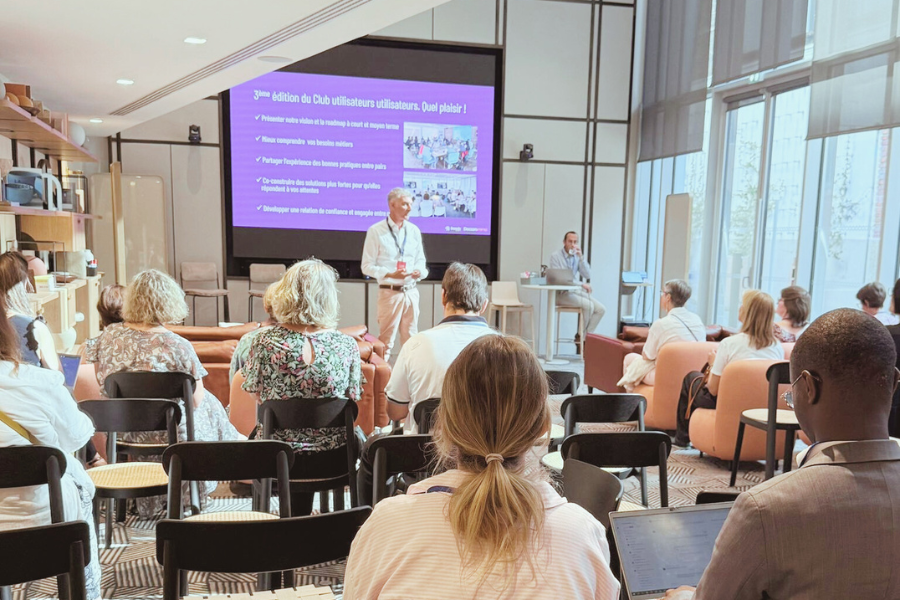
This initiative, whose third edition was held in June 2025, illustrates the platform's participatory and field-oriented approach. Users discuss their common issues, share best practices, and participate in the development of the product roadmap. This co-construction ensures that future developments correspond to real needs in the field.

illustrative image, photo of the Freedz Users Club plenary session, 2025 edition
3rd edition of the Freedz User Club – Tuesday, June 17, 2025

Dashboards to monitor performance

  • The platform offers customizable dashboards that meet the expectations of each profile. 

The CFO can monitor cash flow, committed amounts, and upcoming due dates in real time. The Accounts Payable Manager can view invoices that have been paid, are pending, or are awaiting approval, and has a 360° view of transaction processing.

Support from Customer Success Managers

Beyond technology, Freedz focuses on human support. Customer Success Managers (CSMs) oversee deployment, raise awareness among suppliers, and train internal teams.

Reform as a catalyst for sustainable collaboration

A project that requires dialogue between the three departments

The electronic invoicing reform creates an opportunity for organizational transformation: for the first time, CFOs, CIOs, and Accounts Payable are working together toward a common goal. This collaboration, necessitated by the reform, can become the starting point for a lasting dynamic.

Cross-functional processes that strengthen cohesion

The deployment of an Approved Platform requires a complete rethinking of end-to-end processes. This collective reflection requires the three parties to understand the constraints of the other departments, identify possible synergies, and build optimized workflows. The CFO discovers the technical constraints of the CIO, the CIO gains a better understanding of the operational challenges of accounting, and the Accounts Payable Manager takes ownership of the financial and technological aspects of the project.

A culture of shared data

Electronic invoicing transforms invoices into structured, usable, and analyzable data. This development benefits everyone: the CFO obtains real-time financial indicators, the CIO has standardized data flows to integrate into the information system, and the Accounts Payable Manager can automate controls. This culture of shared data becomes a common language that facilitates future exchanges between the three departments.

A measurable improvement in overall performance

Ultimately, this enhanced collaboration between the three parties produces tangible results for the company. Invoice processing times are reduced, operating costs are lowered, errors are less frequent, and supplier relationships are improved. Beyond these gains, the organization becomes more agile and adaptable. The company becomes more responsive, more efficient, and better equipped to face future regulatory or economic challenges.

🚀 To discover Freedz and its concrete benefits, contact our experts now.

Other articles you may be interested in:

Image illustrating the article: two people working in front of one screen to validate supplier invoices.

Freedz, the supplier invoice validation solution for real estate professionals

Freedz, the supplier invoice validation solution for real estate professionals Between payment deadlines, compliance checks, and the risk of lost documents, manually managing supplier invoices is becoming a real headache for real estate and construction professionals. And what can you do when the volume of incoming invoices skyrockets to […]
To know more about it
Image of people in a meeting to illustrate the launch of the RFE project within the company

Waiting to comply with electronic invoicing reform: why is this not the right strategy?

Waiting to comply with the electronic invoicing reform: why is this not the right strategy? The electronic invoicing reform, scheduled to come into full effect in September 2026, is a real turning point for all French economic players. For social landlords and developers […]
To know more about it
Visual illustration of people in the construction industry

Real estate and construction professionals: why use Freedz PDP?

Real estate and construction professionals: why use the Freedz PA? In the rapidly digitizing real estate and construction sector, efficient and compliant invoice management is becoming a major challenge. The Freedz Approved Platform (formerly PDP) is a dedicated solution, tailored to meet the specific needs of […]
To know more about it