




Tax audit: 3 points of vigilance for CFOs
In France, the calculation of corporation tax is based on the company's annual profit declaration. The latter may sometimes be subject to an audit by the tax authorities, particularly if there are gaps, errors or omissions.
As Administrative and Financial Director, one of your main tasks is to ensure that the company's accounts are properly kept. You must also put in place the necessary tools (certified accounting software, etc.) to comply with legislation. In order to avoid tax audits, here are three aspects to be vigilant about.
Control of fixed assets and depreciation
Fixed assets are assets intended to provide a service, to be used or to produce goods. They are included in the assets of the company and their use goes beyond the end of the current accounting period. Fixed assets generate resources that the company must evaluate and control each year.
They are classified into 3 main categories:
- Financial fixed assets: debt claims, loans to employees, shares in companies or deposits and guarantees... these goods correspond to the monetary assets of the company.
- Tangible fixed assets: these are all the physical assets owned by the company, such as machines, tools, IT equipment, vehicles, buildings or land...
- Intangible assets: these are all non-physical and non-monetary assets such as licences, patents, software, etc.
When a company acquires property or equipment, it must declare the "acquisition cost". This is the value of the asset at the time it enters the company's assets.
Once the acquisition is recognised, the asset must be depreciated in each year following the acquisition. Depreciation takes into account, on the basis of an expected useful life, the loss in value of the asset as a result of its use.
As the calculation of the cost of fixed assets is relatively complex, it is usually a point on which the administration is particularly vigilant.
The tax administration's controls may therefore concern :
- Accurate accounting for fixed assets and their depreciation,
- Control of the depreciable base and rates,
- Verification of the date of recording of the asset and the calculation of the pro rata in case of acquisition during the year.
It is advisable to file and retain all invoices for fixed assets to facilitate reporting and control.
Control of the VAT return
VAT is probably the most frequently audited transaction by the tax authorities. One of the most common problems encountered by companies is the discrepancy between the turnover declared and the amount of deductible VAT. Indeed, there are often many errors due to certain accounting subtleties.
For example, depending on the nature of the purchase, VAT is not deductible at the same time. In the case of goods, VAT is deductible on the date of invoicing, whereas for a service, VAT must be deducted on the date of payment. However, many companies deduct VAT at the time of invoicing, which leads to accounting errors.
There are three ways in which VAT tax audits can be carried out:
- Documentary control, without prior warning to the company.
- The accounting review: this is carried out remotely and consists of checking the accounting records.
- The accounting audit: carried out on the company's premises, this involves checking the accounting documents.
If no adjustment is envisaged after the audit, the tax administration sends the company a notice of no adjustment. Otherwise, it sends a reasoned proposal for adjustment to which the company must respond within 30 days. The company can then accept the adjustment or submit observations. An auditor will then be responsible for issuing a final response within approximately 60 days.
If the company disagrees with the administration, it may refer the matter to the auditor's superior and the departmental liaison officer.
Archiving with evidential value
The last point of vigilance for companies is the archiving of accounting and administrative documents. The Commercial Code requires companies to keep their documents for a period of 10 years. This concerns :
- Invoices (sales and purchases),
- Purchase orders and delivery notes,
- Contracts,
- Accounting books and records,
- Supporting documents,
- Attendance sheets for general meetings,
- Minutes of the boards of directors and supervisory boards,
- Etc.
The conditions for storing and, above all, archiving these documents were relaxed by Article 16 of the Amending Finance Act of 29 December 2016. Companies now have the possibility to store and archive their accounting documents as well as all supporting documents in digital form.
Document archiving guarantees the integrity of the digitised documents and gives them a legal value. In the case of expense reports, this well-defined protocol makes it possible to get rid of paper altogether, since it is no longer necessary to keep the document in its original version.
For other documents issued primarily in paper format, such as invoices, the rules for retention are more subtle. If a paper invoice is scanned according to a well-defined protocol (Article A. 102 B-2 of the tax procedures manual), it can be stored in digital form. However, the authorities still have the right to request the original paper document for comparison with the digital copy. While this is unlikely to happen in practice, completely disposing of the original paper document could put you in an awkward position.
Archiving of expense reports
There are solutions that allow you to easily scan, process and archive your expense reports. This allows you to manage and validate expense reports much faster, while reducing the risk of error and complying with tax legislation.
Archiving of invoices
There are also many solutions available for archiving invoices. Freedz, for example, allows you to process your suppliers' invoices very quickly and archive them legally in just a few clicks.
To avoid tax audits, it is therefore essential to be vigilant. But this is not always enough, and it may be wise to equip yourself with tools and software such as Freedz, which comply with legal requirements. These tools help reduce the number of errors and ensure your business documents are archived correctly, thereby limiting the risk of a tax audit.
Other articles you may be interested in:
Notes d’honoraires et facturation électronique : ce qui change pour les architectes et maîtres d’œuvre
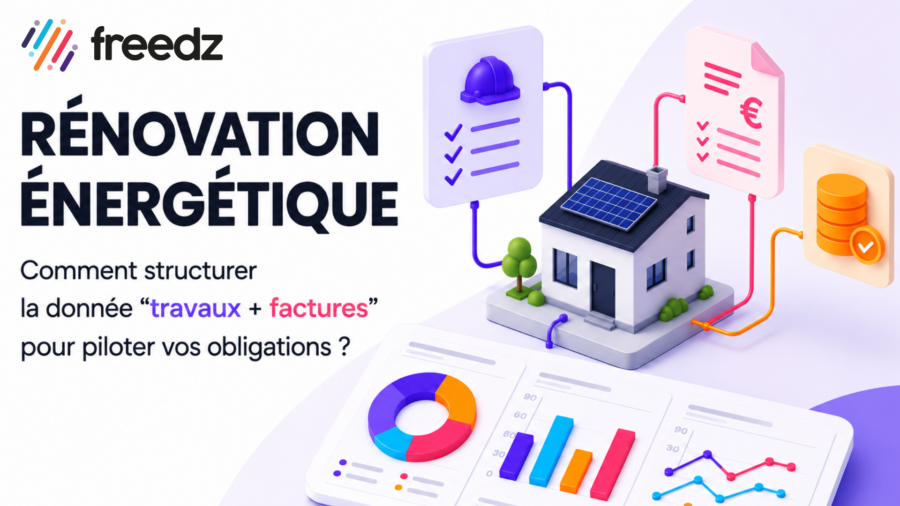
Rénovation énergétique : comment structurer la donnée “travaux + factures” pour piloter vos obligations ?
Bon de commande, bon de livraison et facture : comment automatiser sans rigidifier ?
Our most popular free resources:

White paper: the essentials for a successful digital transformation of your accounts payable
This white paper provides answers to the main questions you may have when making the transition to electronic invoicing, as well as the points to watch out for in order to successfully complete your project.

The Guide to 2024: everything you need to know about the widespread use of electronic invoicing
This guide contains all the information you need to understand the new legislation and to anticipate this change.

Case Study: Improve Accounts Payable Efficiency While Maintaining Control
In order to improve its supplier relations and enhance the value of its employees' missions within the accounting department, Halpades has chosen to completely dematerialise its supplier invoices thanks to Freedz.